
Why U.S. Latino Consumers Are No Longer A “Specialty Segment,” They’re The Engine Keeping America Competitive In A Slowing Economy
Across multiple generations, the conversation around U.S. Latino consumers has lagged reality. Brands still tend to view them as a niche audience or a seasonal campaign target. But the latest economic data tells a different story that is impossible to ignore if you’re a business leader or policymaker who cares about long-term growth, customer loyalty, or national competitiveness.
We see this firsthand through our work with the Latino Donor Collaborative (LDC), supporting thought leaders, executives, and organizations at the center of these conversations: the U.S. Latino cohort is not an emerging market. It is the market. Companies still planning around outdated assumptions are already behind.
Through The Pollack Group’s work supporting the Latino Donor Collaborative, we see every day how far public narratives still trail the data. Sharing LDC’s research with national media gives us a clear view of the distance between perception and reality, a gap that continues to shape how the market is understood.
The country’s growth engine is hiding in plain sight
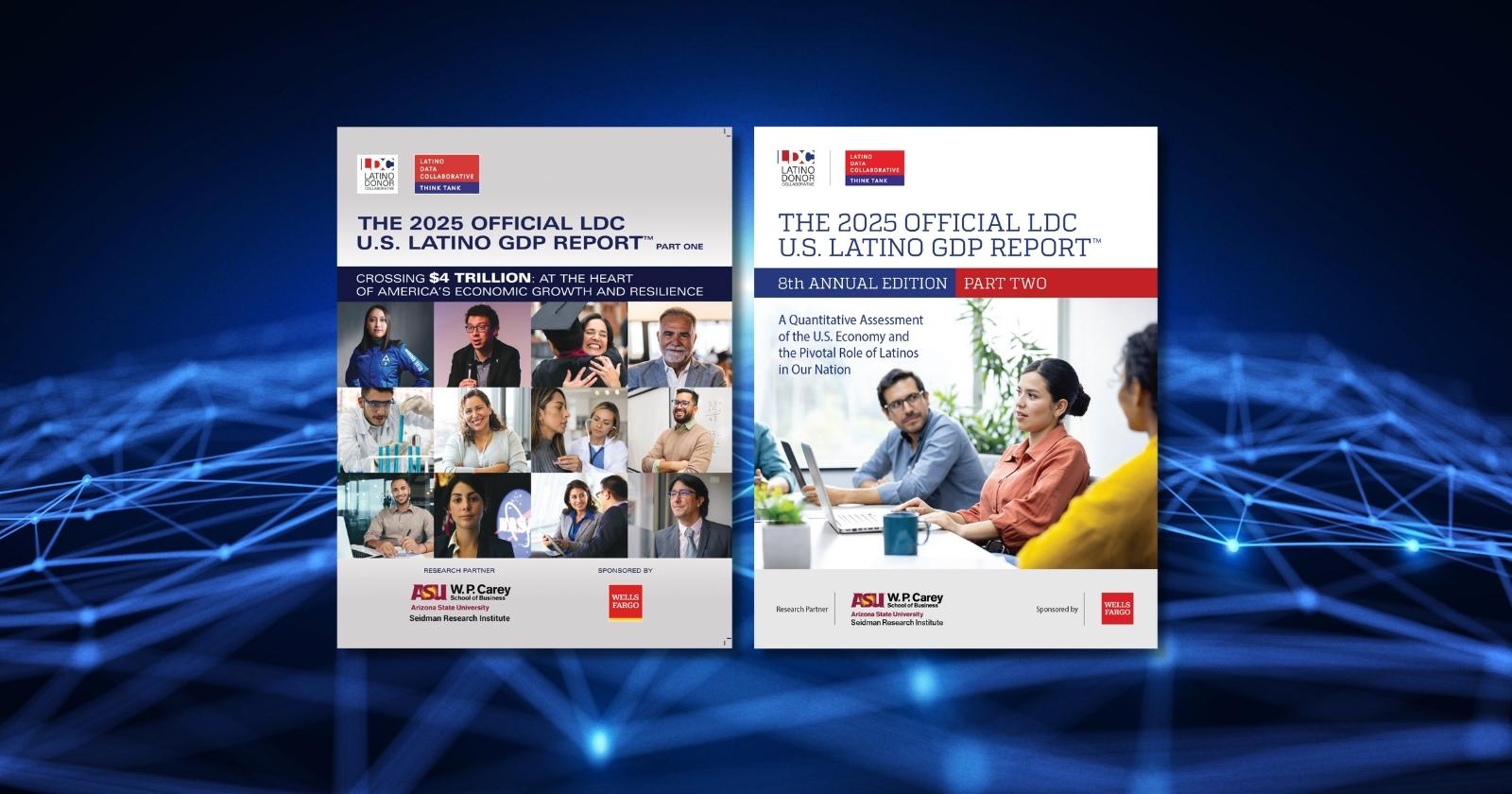
The numbers are no longer debatable. U.S. Latino GDP has reached $4 trillion, making it the fifth-largest economy in the world if measured independently, larger than the U.K. or France, and nearly equal to India.
Latino GDP is also growing at global-economy scale: 4.4% annually, on par with India and second only to China. If the broader U.S. economy had grown at the same pace over the past decade, it would be $6.8 trillion larger today.
This isn’t a footnote. It’s the core of the country’s economic resilience.
Two-thirds of U.S. GDP is driven by consumption. Latino consumer spending, now over $2.5 trillion annually and growing more than twice as fast as the rest of the country, is carrying an outsized share of that growth. So, when headlines warn that consumer demand is cooling, the real story is more nuanced: U.S. Latinos are the stabilizing force keeping the floor from falling out.
Youth is a strategic asset, and Latinos hold the advantage
Most business leaders already know the U.S. population is aging. Few connect that to what it means for hiring, productivity, and revenue over the next decade.
U.S. Latino demographics become even more consequential when you consider:
- The median age of U.S. Latinos is 31, 10 years younger than non-Latinos.
- 26% of U.S. youth are Latino.
- 820,000 Latinos joined the working-age population last year alone, while the non-Latino working-age population shrank by 560,000.
- By 2030, Latinos will drive nearly 80% of new entrants to the labor market.
For companies struggling to fill roles, scale teams, or plan for succession, this is today’s workforce and tomorrow’s.
Beyond Spending: Latino Entrepreneurship Is Reshaping the U.S. Economy
Entrepreneurship is accelerating just as quickly. Latino-owned businesses have been growing 17 times faster than the rest of the economy’s employer firms. Today, 5.7 million Latino-owned businesses generate nearly $1 trillion annual revenue and show higher rates of employee benefits and skill investment than their peers.
U.S. Latinos aren’t just spending disproportionately; they’re building more too. And in a moment when reshoring, supply chain stability, and domestic manufacturing are top priorities, Latino workers and entrepreneurs are essential to keeping the American economy alive.
Brands still respond to stereotypes, not data
Despite the size and scale of this audience, marketing investment remains out of sync with reality. Too often, “Latino outreach” only happens once a year for Hispanic Heritage Month. Major industries continue to underestimate the bilingual, bicultural consumer who is spending on automotive, entertainment, housing, retail, and tech at higher rates than the general consumer market.
The cost of that disconnect is significant. Under-investing in a consumer group that is growing 2–2.5x faster than the rest of the country is not a creative oversight. It’s a strategic miss.
This isn’t a DEI story. It’s a market story.
If your brand or business is preparing for the next decade, the question isn’t whether to invest in the U.S. Latino market. It’s how quickly you’re willing to adapt strategy to align with where the real growth is coming from.
The companies that win will be the ones that treat U.S. Latinos as a core engine of their business, not an adjacency, optional media line item, or worthy only of seasonal effort. A year-round, data-driven strategy rooted in actual consumption patterns, not assumptions, must be the norm.
In helping the Latino Donor Collaborative bring this research into the public conversation, we’ve also seen how quickly leaders recalibrate once they understand the scale and momentum of the U.S. Latino economy. The challenge is not the data; it’s ensuring that decision-makers hear it. When this information reaches the right rooms, strategies, investments, and expectations shift almost immediately.
The new mainstream, U.S. Latinos, has already arrived. It’s time for the rest of the market to catch up.