The New Rules of Influencer Marketing
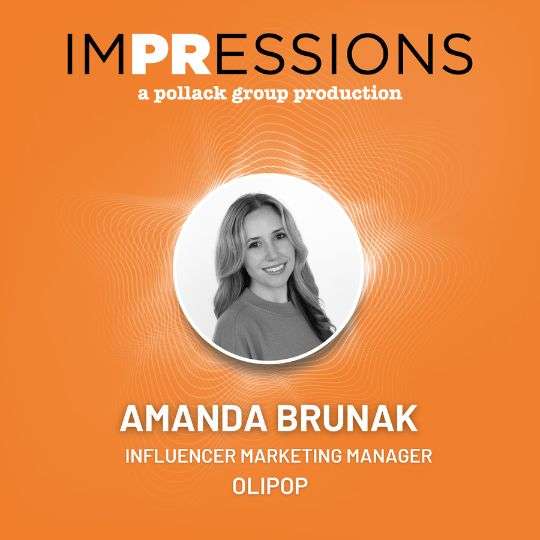
Influencer marketing has evolved far beyond sponsored posts and vanity metrics. As audiences become more selective about the content they engage with and the companies they trust, brands are rethinking what successful influencer partnerships really look like. This week’s imPRessions episode explores the world of influencer marketing with Amanda Brunak, Influencer Marketing Manager at OLIPOP. Tune in as we discuss how influencer marketing has evolved in recent years, why engagement is only one piece of the measurement puzzle, and how brands can build long-term partnerships that resonate with consumers rather than feel transactional.
Kalli: Hi Jenn
Jenn: Hey Kalli
Kalli: Jenn, can you tell me when the last time you were influenced was?
Jenn: Oh geez, that’s a really good question. I do fall sometimes into the Instagram algorithm shopping traps because now it knows me so well and it’ll promote really like fun horror home decor or like sweatshirts or something. So I have been influenced.
Kalli: Yes, I was gonna say, I understand that pain. On my end, it’s usually makeup or makeup brushes. And I gotta tell you, I don’t hate the makeup brushes that I was influenced into buying.
Jenn: I’ve had good results myself. I mean, I’m trying to not impulse buy, if you will, but I will say Instagram does a good job about kind of giving you some quality stuff so you’re not just buying crap and feeling like you’ve gotten scammed. So yeah, I’ve been known to be influenced. Yep.
Kalli: Yeah, I gotta say, shout out BK Beauty Brushes. They’re fantastic. But also one brand that’s doing a really phenomenal job with their influencer marketing is Olipop. So actually we invited Amanda Brunack today. She is their influencer marketing manager and she’s gonna take us through a really deep dive into the new rules of influencer marketing and what it really looks like to be ingrained in it and finding the right people, the right content, the right fit, because there is so much more that goes behind the scenes than these short clips.
Jenn: As long as I’m not influenced to buy more crap that I don’t need, I’m on board.
Kalli: I’m on board. Olipop is supposed to be good for you, so we should be just fine today.
Jenn: Okay, well then maybe I’ll buy it.
Kalli: Perfect, so let’s get to it.
Influencer marketing is everywhere, but doing it well is surprisingly rare. In an industry that is built on algorithms and self-promotion, the line between authenticity and paid marketing can get blurry. Brands are now finding themselves asking big questions. How do you measure success beyond likes and views? And how do you build relationships that last before a feed feels oversaturated? We’re going to dive into all this and more with today’s guest, Amanda Brunack, Influencer Marketing Manager at Olipop, who will help us explore the biggest shifts happening in influencer marketing right now how ai is beginning to reshape the industry and the myths brands need to let go of if they want their programs to actually work. Hi Amanda, welcome to the show.
Amanda: Hey, thanks so much for having me.
Jenn: Yeah, no, we’re really excited for this topic. And, you know, as we were kind of talking about before, it’s definitely a hot subject matter so want to definitely dive into all things influencer marketing. But before we kind of talk about the point of the episode today, I would love if you could tell us a little bit more about your background, how you got started in your career, just love to kind of see how you became the marketing influencer marketing manager at Olipop.
Amanda: Awesome. Yeah. So a little bit about me. I grew up in Southern California. And as we all know, that’s the entertainment capital. So basically storytelling and media were just always around me. And I was super lucky to go to USC Annenberg. And while I was there, studied public relations with a minor in marketing. And basically I had a handful of PR and communications internships across entertainment and CPG. Obviously being in LA, I just really wanted to take advantage of having access to all the different amazing brands and companies that were driving distance to USC. I was super dedicated towards making a schedule where i had that coursework but also a couple days a week driving you know to NBC Universal and a few other places that NBC Universal and a few other companies that I’m going to share but my favorite one that really just stood out to me was the opportunity to work with the toy brand Hasbro and you know through my coursework at USC being around film and music I obviously knew that I could go the entertainment PR route but with that internship at Hasbro I just realized and I also love so much the fact that I could help you know storytell for brands that I even just use on a daily basis or even brands that I had a connection to at you know even just one point in my life like when I was a child so obviously it was so fun working on My Little Pony projects and Disney princess and again just being able to help storytell for for those projects and and their marketing campaigns just made it so fun and personal and a little bit about when I reached graduation, I ended up diving into the food and beverage world and I ended up joining plant-based beverage brand Calafia Farms. And there I was able to work on campaigns and partnerships that helped communicate brand messaging for different lines of products like creamers, plant milks, coffees, literally so much fun. And now I’m at Olipop, which is a better for you soda brand. You might’ve heard of it. And over here, I help oversee influencer. and celebrity talent strategy to help drive brand awareness.
Kalli: That’s awesome. And I think, you know, it’s really funny that you say when you first started, you know, started in PR in your internships that you were doing more entertainment because that was what was around you. Jen and I were both based in New York and I, originally, it was like, I’m going to be in entertainment PR, like I’m going to be somebody’s publicist and then it was like the same thing, like you said, like you start to work on different types of things and you’re like, oh, this is this is what speaks to me. But interestingly enough, now kind of we’re taking a little bit of a shift back because of the way that influencers work and it’s still very much a part of what we’re doing. So obviously, influencers are a horse of a different color. And when it comes to influencers authenticity really is key, so how do you measure authenticity you know in today’s world that really was created for self-promotion?
Amanda: Totally. And it’s honestly so crazy how I can see like many people can be an influencer these days. Really, anybody can and build their own brand online and have such an impact on their audiences because people are really, you know, they look to who they’re following and they see them as a friend and they really trust them. So there’s a lot of big responsibility that comes with it, with these influencers having their major platforms. And also, you know, I learned in college about word of mouth marketing. And I truly think this is the most modern version of that. And people are really, again, just trusting what they have to say and believing everything they have to say. And with that, it’s just brands really have to lean into what is authentic when it comes to who they’re vetting. And because that will truly show with the content that they’re putting together with these influencer partnerships.
Jenn: Yes. And that can be tough in today’s world right because even if there is somebody that you really love to follow and it doesn’t have to necessarily be a professional influencer. It could be like a reality star or a blog, like just somebody that you’ve always liked, you’ve gravitated towards, you like their content but as soon as you see like an Instagram post or something that says sponsor content, I want to believe that she really likes this skincare cream. Like I do, you know, I want to believe all the things that she’s saying about the product, but sometimes that is, it’s still kind of the line is blurry, right? So from your perspective, as you work with a lot of creators, what do they often misunderstand about how a brand evaluates success? Because today, because there are so many different people that are getting paid to do Instagram stories and product reviews and unboxings and things like that, I imagine it’s a lot different today than how it used to be. So what do you think that creators kind of sometimes misunderstand about that when working with a brand?
Amanda: Totally. I think the whole idea of success really does draw back to the whole idea of authenticity and my biggest factor when it comes to working with influencers is to really just make sure they’re a true consumer of the brand uh to even just start with and I, on a daily basis, I’m using these influencer marketing tools and and different softwares and staying close with our social media team just to keep a pulse on who is consistently shouting us out on a daily basis and I think that’s the first thing that really does stand out to me. It’s great to work at a brand where we get a lot of different outreach and inquiries from different influencers. And that’s how it was also at my previous role as well. But again, just authenticity is huge. And not just that, but I would say once we get past that point and we know they’re an authentic user, a consumer of our products, we have to get past a follower count size. We have to look deeper into that. And that can also, some influencers think, oh, because I have this certain reach, this brand’s going to pay, they should be paying this amount of money. And for me, I like to pay attention to. the type of content that they’re already putting out, not just those organic posts, but that paid content as well and looking to see how that truly resonates with their current audience and how that’s performing. And so we also like to think, would their audience genuinely care if this partnership came to life? I also look at content sentiment. What are people saying after you know we put together a partnership and what are they saying in the comments? Whether it’s to support a retail exclusive launch let’s say we’re having a limited edition flavor of soda at Target and we want to help support that launch well I like to see if we’re hiring you know these Target-loving influencers and they’re helping support the launch I want to see what are people saying in the comments afterwards. Are they saying “oh my gosh I had no idea”, are they running to get this? This is just, you know, the really big picture of truly what can help make a campaign successful.
Kalli: That makes a lot of sense. And I feel like there’s definitely the way that we approach influencer marketing today is very different than, you know, when it first really became a thing. I remember, and not to show my age, but I remember when influencer relations like first started being a thing and I was at an agency and we had an influencer marketing brand come in and I swore I went to high school with this guy because he looks so familiar. He was on The Bachelor. I did not go to high school with him. So thank God I didn’t say anything. But it’s just, it’s so different now. Like that wouldn’t necessarily happen. Even that wouldn’t happen now. There’s so much more to it. And there’s so much more strategy and more science that goes into it. So just in your opinion, like you’re seeing it much closer than we are. What is the single biggest shift you’ve seen in influencer marketing over the last few years?
Amanda: Yeah, you know, to answer that question, the biggest keyword is just education. Education around influencer marketing in general. I mean, it’s so crazy. When I was at Calafia Farms, I originally started in a public relations role and we had our PR agency helping us with our influencer partnerships. And as I learned more about it and gained more responsibility with that, I actually made an internal business case. Hey, we actually need an in-house influencer role, basically, you know, helping making sure that everything we’re doing is aligning with our marketing plans and they trusted me. And that’s how I really actually just grew into a career path in influencer marketing. And so again, back to that whole education topic, I think more and more brands are starting to learn that this can be such a huge marketing driver, especially when it comes to communicating with their target audiences. And they’re starting to invest real marketing dollars into it. I think also something that I’ve grown to see with different brands and just, you know, from researching also and hearing other people in my types of roles, share as well is that you can gift a product all day long and get that those organic shout outs and I’ve heard the argument before basically oh well if we’re gifting products you know we don’t need an influencer budget I actually disagree with that if your company’s fortunate to have that budget I think it’s super important to have that mix of organic product gifting but also paid because when it comes to paid you’re able to properly communicate the right product messaging that your brand has aligned on.
Jenn: That’s a good point and I want to kind of like segue that into what you brought up before about reaching out to influencers and seeing if they’re organically using the product themselves because I think that that well there’s a couple of things right it’s kind of a cheat way in a sense for somebody to be like I really want some free samples from Sephora or something so I’m gonna but you also want to tap into the right audience that genuinely not only will use your product and give it a fair review, but their followers also are, you know, somebody might have a very specific audience and they just want something for themselves that, you know, they wouldn’t be a good partner, right? So you said that you use a bunch of tools to kind of see kind of like social listen a little bit about current influencers and what they’re saying about your product. How do you spot them before they become too popular? And can you walk us through kind of what the logistics are around that? Like, does the brand send them an Instagram message? Is it a look a little bit more formal? So how do you spot them early? And then how do you kind of go about making it a formal partnership?
Amanda: All right, you’re going to get my biggest Gen Z typical stereotype answer and it’s being chronically online. I think it’s super important to take some time out of every day, just to do some scrolling and see who’s trending, see, you know, any rising creators. And obviously it helps so much already just being myself, the target, one of the target audiences for the brand that I’m working at. So I’m already naturally following people with similar interests, you know? So again, being chronically. online always keeping a pulse and just keeping tabs again on who’s taking off but separate from you know the manual scroll and promising my co-workers that I truly am working and not just scrolling social media but obviously using those tools and it’s great because let’s say let’s say I manually find someone that I think would be a great fit or they’ve you know have tagged us and my social team flags that I’m actually able to plug in their numbers in our tools and see what their growth rate is so if they have a really great growth rate this actually gives me some confidence to present to leadership and say hey we need to invest in this person now because they’re only going to grow. It’s all about quick activation as well and joining being quick to that online uh you know trend and if we’re too late we’re going to be miss the boat so I actually use the growth rate tool when it comes to building a business case on hey can I get approval, can I get this budget, we really need to activate this person sooner rather than later because if we wait you know a couple months from now their rate can triple and I’ve actually seen that happen a few times in my career.
Jenn: Right. Is that always important in terms of the point of influencer marketing is to reach new audiences and it’s to make sure that your product or your brand is getting in front of the eyes of people and you’re paying somebody to kind of spread that word. Does it sometimes benefit the brand to go for somebody that might not have as high of numbers, but there’s something about them? They would just, they really fall in the brand perception that, you know, do you ever really kind of run into that and you take a gamble on somebody? Or on the flip side, what if somebody looks absolutely great on paper and they do have a great following and growth rate but you’re like there’s something about them that just doesn’t they don’t rep they wouldn’t represent our brand in the way that we want our brand represented? So what do you do in those instances?
Amanda: Totally. You know I think in these types of instances and seeing you know throughout the year and with social media and the virality of someone can be a hit overnight. And it’s really important that brands set aside not just a budget for always on influencer marketing, if they’re fortunate enough to and really want to invest in that, but also a budget for pulse influencer moments. And so that that is a great way for us just to keep it again, like really, if we see someone who. We’ve never worked with this type of person before, but we want to test it out and we think they’d be a fun fit. We have a budget for that and we can see if that resonates with our audience. And again, just like I said, keeping that budget and always just scrolling social to see what types of different niches are trending and quickly activating those influencers on the rise. I think, again, just making sure if there even if there is someone on the rise, that doesn’t necessarily mean that they would always be a great fit for the brand. So I think it’s still great and important to make sure, uh, you know, you’re always keeping your brand values in mind and, and aligning with, okay, even if this person’s big, are they right for our brand?
Kalli: You know, I, I gotta tell you, I love that you’re like, keep saying, I just scroll a lot cause I know like I’ve, I’ve been there and I completely understand that. And I think one of the other things that you’re mentioning is the tools that you use and I think a lot of people don’t understand how much data and research goes into selecting influencer partnerships and things of that nature. So just curious, are there platforms or creator behaviors that brands are undervaluing right now that we should be taking a look at? Or in your experience, what are you seeing right now that you think everyone needs to know?
Amanda: Right. You know, I think the biggest, one of the biggest shifts I’ve seen from starting off in my career to now, and that’s been, you know, not even that many years to be quite honest. Like this is literally just since I graduated college, how big I’ve seen this industry transform. And I would say the biggest thing is brands can have fun with their creator content. They don’t have to follow some, have their creators follow some strict brief. Obviously it’s important again, to make sure they’re aligning with the proper talking points and making sure it’s a brand fit but allowing that creator authenticity and letting them come up with their own creative ideas and and yes it’s cool that they and important that they can tie in maybe one to two talking points but I even see and hear feedback from creators it’s overwhelming when brands have 20 different talking points and they have to hit that how is that going to resonate with their audience it’s just going to come off as an ad a straight up ad if their brands are caring more about the talking points than the actual storytelling of the content.
Jenn: So with all of that said I want to ask you about Olipop specifically, been there for some time now and I’d love to know a little bit about some of your favorite campaigns or some of the most memorable campaigns can you walk us through and if you don’t have to name names if you don’t want to but can you walk us through some influencer campaigns that really stood out to you, whether the engagement was just great and you saw like a spike in sales or social growth, or even if it was just a fun collaboration, what have been some of the most memorable moments for you?
Amanda: Yeah. So again, I would say my most successful campaigns so far are really the ones that we had the most fun with, you know, allow the creators to be themselves. And I would say, quickly that resulted from people that we quickly activated and people who were on the rise by taking plugging them into our social media analytics tools and that was just a great way for us to tap into those cultural social media conversations at the time some examples include WNBA player Cameron Brink allowing us to tap into that female athlete demographic. But also a really fun example is and my one of my favorites is we partnered with tick tock singer he’s called Mr. Fantasy and we literally saw him on the rise and we’ve never really partnered with anyone like him. And we just quickly got approval to have a fun partnership with him and his organic idea was, hey, how about I surprise a retirement home and give them a bunch of Olipop and just brighten their day. And we absolutely love that idea. We limited, you know, how much, if any, talking points about the product, we just let him have fun with it. And that post alone on TikTok generated over 44 million views, believe it or not. And people in the comments were going crazy just because it was so authentic and it didn’t even look like an ad truly. And funny enough, we even saw our social media team flagged with us some people dressed up as Mr. Fantasy for Halloween, holding a case of Olipop. Isn’t that crazy?
Jenn: Oh, that’s so cute. And I think it’s really cool to sometimes throw away the rules and just kind of giving a little bit of leeway. Like, we’re not going to give you a talk track. We’re not going to give you a script. We kind of trust your judgment. I think that’s, I mean, obviously it paid off.
Amanda: For sure. And that was so organic with just the views and just, it was so nice seeing just the comments and how it truly resonated with everyone and just made their day.
Kalli: I think that’s great. And I’ve seen Mr. Fantasy and he’s such a big personality and a very unique one at that. So to be able to give him that freedom, I’m so glad it worked out so well because sometimes it can be a little scary, especially when it is somebody that’s new and up and coming and you don’t really know what to expect. So how do you balance the creator freedom with that brand safety, especially for a brand like Olipop that is wellness focused? What do you have to keep in mind? Because if you had so many rules, Mr. Fantasy’s interaction could have fallen flat like you let him be him but there’s obviously some thought and some rules that go into it.
Amanda: Totally yeah I think it’s super important to while we have that budget for fun pulse influencers also making sure we’re tapping into different categories again like those wellness influencers and still communicating a lot of our product message points you know like the benefits of fiber um and gut health and stuff like that so really again it just goes from the beginning of the vetting process and no matter what category they are still making sure they align with our our brand values. And I think something that a lot of brands are continuing to realize is that once you do lock in these people, whether it’s a short-term or a long-term partner, there is a lot of risk that is associated and goes along with that partnership. And so brands, just in my eyes, in my opinion, I think it’s super important just to keep a pulse on those partners and making sure throughout that contract, even beyond that contract, that they’re communicating what they’re putting into the world what they’re communicating is still aligning with your brand and it’s really it’s really vital because consumers will you know they’ll know they’ll notice if someone you’re partnering with says something good or bad and that’s directly associated a lot of times with your with your brand.
Jenn: Oh yes they will, they sure will and you know we’ve unfortunately seen that we’ve worked with brands even in the last couple of years that partnered with some interesting people that had at one point was very popular and had a big following and then some scandal came out and then then the PR team has to do damage control. So I think that’s great advice. I wanna ask you the dreaded question that everyone is kind of rolling their eyes at now because you can’t go anywhere in marketing or PR without hearing it. What do you think about AI? Where do you see AI playing into influencer marketing in the future?
Amanda: Yeah, no, that’s a great question. And I think AI is super useful and can be super beneficial. It’s actually really interesting because I’ve tried to find ways in how I can implement it into my own role recently. And I’m just, it’s interesting comparing my experience now to even just last year and how much it’s helped me truly when it comes to like vetting influencers and helping with project management specifically. I do think the biggest call out though for brands and this multiple industries actually is that brands just need to learn not to rely on it too heavily or else honestly all campaigns start to feel this and look the same. Everyone just sounds the same and there’s no authenticity to it. And also something that as I’ve seen, you know, AI grow just in the past couple of years at the different brands that I’ve worked at, they’ve emphasized the importance of being mindful, not sharing that confidential information because obviously AI can be super helpful, but there comes to a point where you don’t want to be sacrificing top secret information and plans for your brand.
Kalli: I agree with that. I like that. You point out that a lot of the AI stuff starts to look the same. I’ve noticed that myself, and especially in a lot of the visual aspects that you can, you know, it’s very easy to tell, even if it looks authentic, that there’s like just something not right. And it’s there’s that like a little bit of similarity. But I also want to kind of dive into what is one influencer marketing myth that you wish that brands would stop believing?
Amanda: Here’s a good one. Okay. So the minute they hire someone to help with influencer marketing, we get the request. All right, let’s now go viral. We can go viral. And it’s really not as easy as it sounds. And, you know, influencer marketing is strategic and intentional. You can’t just go viral because you check these boxes. It really, there’s a lot of planning behind it. And again, just leaning into what makes the most sense for your brand and is the most organic. And that’s one way that will help you go viral, but it takes time. It’s not easy.
Jenn: That’s like equivalent to the PR clients that say, I want to be front page of New York times. You know, it’s like, come on.
Kalli: Yes. I just started this brand. So when am I on GMA?
Amanda: Exactly. Like I hired a PR agency. Why aren’t I getting headlines? You know, it’s like, well, are you doing anything newsworthy? Are you doing anything to help us get you those headlines? It’s literally just a similarity with the whole, you know, social media and going viral. Same thing.
Jenn: Exactly. So I feel your pain. It’s like, oh, please don’t say it. This has been great, really, and really informative. And like I said before, it’s just even good for me and Kalli to kind of brush up on what’s happening today in influencer marketing. With social, with PR, a lot of the world, in the way that we work, in the industry that we work in, it changes quickly and it evolves fast, which is fun and keeps us on our toes. But we definitely have to be paying attention. So I’m curious. Given what you know right now about influencer marketing, where do you see it heading in the future? Like, what do you think, you know, a lot of people, we didn’t know what AI was, right? Like four years ago, nobody was using ChatGPT to build influencer scripts or do research to find new content creators. So what do you see? I mean, we can’t predict, but what do you think is going to happen for influencer marketing down the road?
Amanda: I think it’s only going to get bigger from here. I mean, it’s crazy to see how much it’s taken off just since, you know, 2020 and COVID with the rise of TikTok and more and more people hopping on the platforms and like Instagram and again, TikTok and realizing they can have their own brand and partner with their favorite brands as well. But I think in addition to just the industry growing as a whole, I think as more brands invest in influencer marketing, I think it’s important when you’re getting started that you don’t need a big flashy influencer to tell a great story that resonates with your audience. And I think just starting small in general is totally okay. I think you need to just start with leaning into your existing community because at the end of the day, they’re your best advocates.
Kalli: That’s so true. And, you know, that’s where the authenticity comes into. So, again, this has been so great. I’ve really enjoyed this conversation. Kind of to leave us with a little bit more, what advice would you give brands that are just starting to build their influencer programs now?
Amanda: Totally. I think if they’re starting from scratch with their influencer program, it’s okay to be scrappy. I think it’s okay to lean into influencer gifting. And if you are leaning into paid influencers, again, just starting small, you don’t need to make a business case that you need some major celebrity. You don’t need a Margot Robbie or anybody in your influencer campaign. Again, just leaning into who’s already posting your products and creating.I think it’s really great to build relationships from scratch, especially with those influencers who are on the rise. And let’s say you may not have budget at the time to pay them, I think it’s great to start with gifting and just communicating with them in the DMs and making them feel acknowledged. And I think that’s where if you do have a small budget, the influencer might be open to. Let’s say that budget isn’t to what they’re usually paid, but the authentic influencers that you reach out to, if they are truly a fan of the brand, I’ve seen in many cases they’re willing to promote the product just because it speaks to them and they truly do love it. So again, back to what I was saying, just the idea of following authenticity.
Kalli: Thank you so much for joining us today, Amanda. We’ve really loved hearing your unique perspectives and having built a career at the intersection of brand strategy and creator partnerships. So really, thank you so much for sharing your insight with us today. Really appreciate it.
Amanda: Thank you both for having me. I’ve truly enjoyed our conversation.
Kalli: Amazing. Us too. And also a big thank you to our listeners as always. Thank you for tuning in and letting us continue our show with you for another season. If you have a guest in mind, please reach out at impressions@pollackgroup.com and be sure to follow our channels on all platforms to get the latest news about ImPRessions. See you next time.
Solutions
Some communications challenges call for a more focused approach. The Pollack Group’s proprietary solutions combine decades of communications experience with specialized methodologies, technology and audience intelligence to help organizations solve specific business and reputation challenges. From strengthening messaging and preparing for a crisis to understanding audiences, elevating leaders and measuring how brands appear in AI-driven search, our solutions give organizations practical tools and insights they can put to work.
Leadership Now
Creating leadership platforms that are essential to building audience trust and confidence.