
Pssst, Did You Know Most Word of Mouth Is Offline, Not on Social Media?
We introduce our next guest blogger of our monthly series on the 25th of every month, in celebration of our 25th anniversary this year, Ed Keller, CEO, The Keller Fay Group.
Ed Keller, CEO of the Keller Fay Group, a specialist market research firm focused exclusively on word of mouth marketing. He is a Board member and past President of the Board of the Word of Mouth Marketing Association (WOMMA), a board member of the Advertising Research Foundation, a board member of Bazaarvoice, and a member of the U of Pa’s Annenberg School’s Alumni Advisory Board. He is Past President of the Market Research Council, and has lectured on word of mouth marketing at Wharton, Columbia Business School, NYU’s Stern School, and other leading universities. Keller speaks frequently to business audiences about word of mouth marketing, and is quoted frequently in the trade press.
Social media is all the rage today among marketers and communicators. The allure of Facebook, Twitter, Four Square, and other social networking sites, along with all the apps that help to fuel conversation and allow marketers to connect to consumers, is a powerful draw.
But here is something that might come as a big surprise to some of you. Despite the tremendous attention being paid to social media, and the meteoric rise in the number of people using social media, when it comes to brand-related conversation, the overwhelming majority of word of mouth (WOM) still takes place the good old fashioned way – face-to-face. In fact, over 90% of WOM is offline, and less than 10% is online. And of that 10% which happens online, only 1-2% comes via social networking sites or blogs.
How do I know this? Because every week since 2006 my firm conducts research with Americans ages 13-69 and asks them to report to us about brand-related conversations in 15 different product category areas ranging from fast-moving consumer goods such as food/dining, beverages, personal care products, and household products, to higher consideration categories such as automotive, technology, and travel. And in every single category, the story is the same.
How could this be, you might be asking? Are the statistics about the 500 million people who have Facebook accounts somehow incorrect? Or the fact that people are spending a growing amount of time each day on Facebook?
No, they are not wrong. But what is not as well documented is the literally billions of brand impressions that are created daily (yes, daily) via offline conversations. The online stats are easily measured, and therefore well reported. Offline, while harder to measure and therefore less well reported day in and day out by the marketing and tech press, is massively larger.
What is more, our research shows that offline WOM is more credible, and more likely to lead to purchases than online WOM.
This research does not mean that online-oriented strategies are wrong or a waste of money. In fact, the internet is playing a growing role in helping to fuel word of mouth. Over the last few years, the internet has become just about as important as a medium that sparks conversation as TV. But it’s not the medium via which the conversations actually happen. If you want to know more about the different roles that TV, the internet and print all play, I would encourage you to read the research we have published recently about this.
The conclusion that I hope you will draw from our research is that in an era when word of mouth is the dominant force in driving purchase decisions, brand marketers need to think holistically. It’s not enough to focus just on social media. Think about your online strategy, yes, but that should include your website, and internet content, and ratings and review sites, and online advertising – in addition to Facebook and Twitter. Think, as well, about ways to encourage offline conversation. This can come via experiential marketing or in-store activity, whereby people can see, feel, and touch your product. (Apple stores are a great example.) Advertising can and does act as a powerful conversational spark, as well. In fact, more than 20% of conversations are driven by ads. Advertising plus word of mouth is a powerful combination.
Marketing success in the 21st century requires new approaches. But just because the pace of technological innovation is often dizzying, don’t overlook the power of basic human connections to drive your brand success.
The Latest
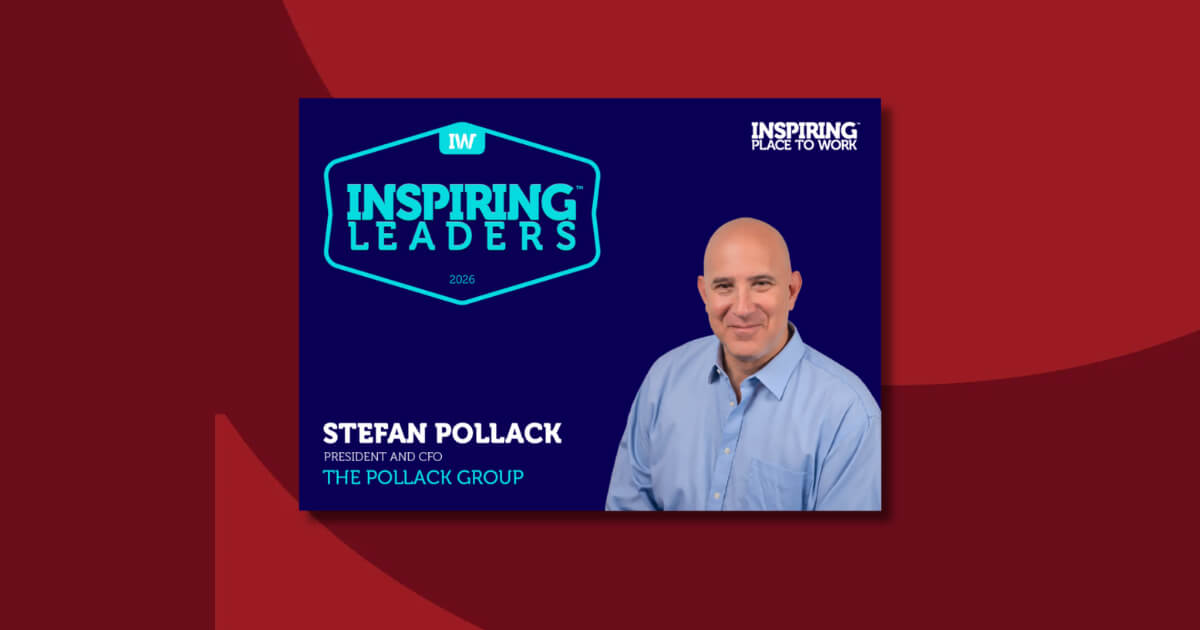
Stefan Pollack Recognized as a 2026 Inspiring Leader for Second Consecutive Year
Stefan Pollack earns his second consecutive Inspiring Leader recognition in 2026 for his commitment to people-first leadership, mentorship and workplace culture

How to Choose a PR and Creative Agency for Brand Storytelling
What to expect from an agency that combines PR and creative, the evidence to request, a scored checklist and a shortlist template for brand managers.
Looking Ahead to 2027: Our Predictions for PR and Marketing
What's ahead for PR and marketing in 2027? The Pollack Group shares predictions on AI search, brand reputation, discoverability and communications trends.

How to Choose a PR and Marketing Agency for Your Industry: A Buyer’s Guide
How to choose a PR agency for crisis, nonprofit, B2B tech, fintech, consumer, food and beverage or startup needs: criteria, proof and pitch questions.