

The Re-defining of PR Generalists
Traditionally, PR Generalists were defined as having in depth experience in several industry sectors, as compared to specialty agencies that focused primarily on a single industry. For example, some specialty agencies would solely focus on the tech industry or healthcare industry or on the consumer packaged goods industry. Traditionally clients had greater confidence in specialists and the “sell” for generalists to convince companies that their industry experience matched that of specialists, was often an uphill battle.
As CEO of a generalist agency, I was once asked by a shoe company who was searching for an agency, as to how many shoe company clients we had worked with. That was their stipulation for hiring an agency. If agencies had gone that granular as to categories of specialties, it would have just attracted a handful of prospective clients, and sporadically at best, and therefore would not have been sustainable for any agency.
So the traditional generalist agencies categorized their specialties according to overall experience in larger groupings such as business-to-business, which dealt with all sorts of professional services and associations, or consumer electronics, which covered the gamut of technology as it related to consumer use, or sustainability, which included environmental concerns, or non-profits which were not industry specific. Then there was the travel and tourism specialty that covered a slew of categories, from hotels to travel sites to international resorts and more.
However, given the dramatic changes in today’s communications landscape, the traditional agency model, whether generalist or specialist might very well be dying or even dead at this point. Per an article by Arun Sudhaman, partner and editor-in-chief at the Holmes Report, the new PR agency model is tilting in favor of structures that group people around distinct “specialisms” that are totally unrelated to industry experience. A new breed of client servicing is sprouting that includes specialties in idea creation, insight, content creation and engagement. Golin was the first major agency to commit to such a model, with such specialisms as “connectors” those that engage consumer and business audiences across several media categories (earned, shared, owned and paid); “catalysts” those that grow client relationships, “creators” those that generate ideas, and “explorers” those that deliver insight and measurement. Others are following suit with major restructuring of similarly grand ambition.
But really nothing has changed. Only the titles have changed, for all agency account handlers have had those same responsibilities in the traditional model. They have been responsible for coming up with creative concepts, have had to offer fresh insights, have had to deliver content, manage all sorts of media relationships (earned, shared, owned and paid) and certainly had to engage a client’s diverse audiences. This new structure seems to be a new variety of micro-specialization in skills, talent and expertise, rather than industry-specific.
I agree with Arun Sudhaman’s comment that what we now have is a resurgence of the PR agency generalists, but with a twist. The perception that generalists may have had a disadvantage vis a vis specialist agencies, will now be a thing of the past. If this new structure of “skill specialisms” as opposed to industry specialists, will be adopted and become widespread, generalist agencies will have been re-defined and the “score” will have been evened out. The key, however, will be in the “sell” of those specialisms to prospective clients and in understanding how to implement them effectively, as well as build a client’s confidence in these, as opposed to industry specialists’ expertise.
The pendulum appears to be swinging back toward an emphasis on skills and capabilities as a strategist and counselor, rather than that of a focus on industry experience — which was the standard bearer of all agencies in the first place.
The PR agency generalist has demonstrated an enduring capacity for reinvention.
Generalists are redefining themselves now…
The Latest
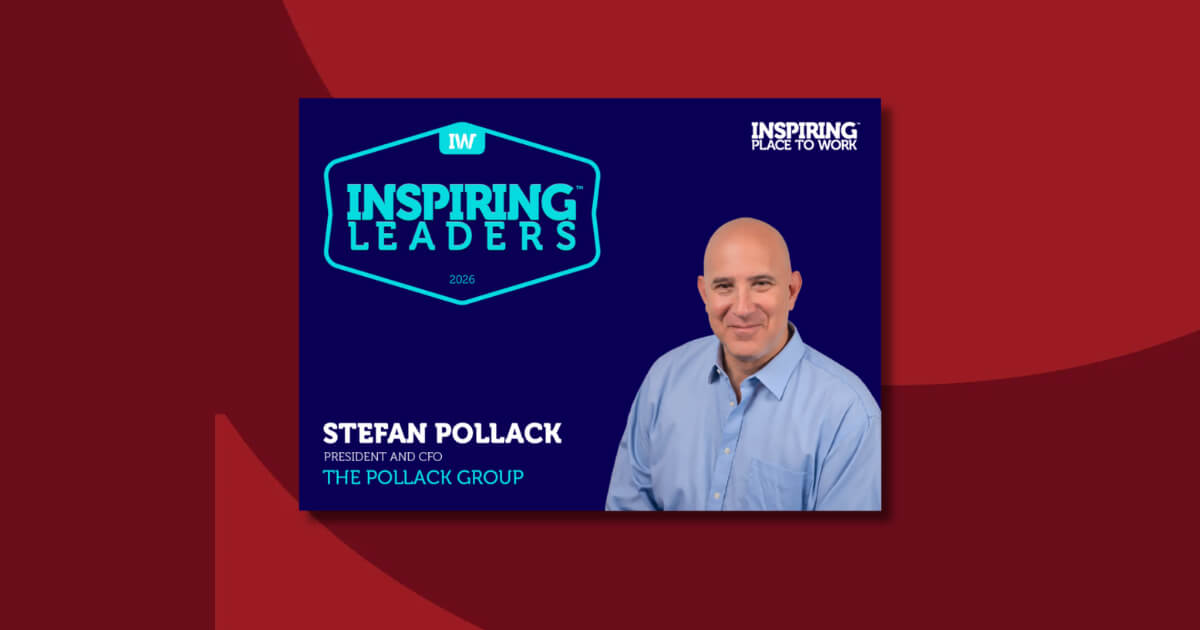
Stefan Pollack Recognized as a 2026 Inspiring Leader for Second Consecutive Year
Stefan Pollack earns his second consecutive Inspiring Leader recognition in 2026 for his commitment to people-first leadership, mentorship and workplace culture

How to Choose a PR and Creative Agency for Brand Storytelling
What to expect from an agency that combines PR and creative, the evidence to request, a scored checklist and a shortlist template for brand managers.
Looking Ahead to 2027: Our Predictions for PR and Marketing
What's ahead for PR and marketing in 2027? The Pollack Group shares predictions on AI search, brand reputation, discoverability and communications trends.

How to Choose a PR and Marketing Agency for Your Industry: A Buyer’s Guide
How to choose a PR agency for crisis, nonprofit, B2B tech, fintech, consumer, food and beverage or startup needs: criteria, proof and pitch questions.